
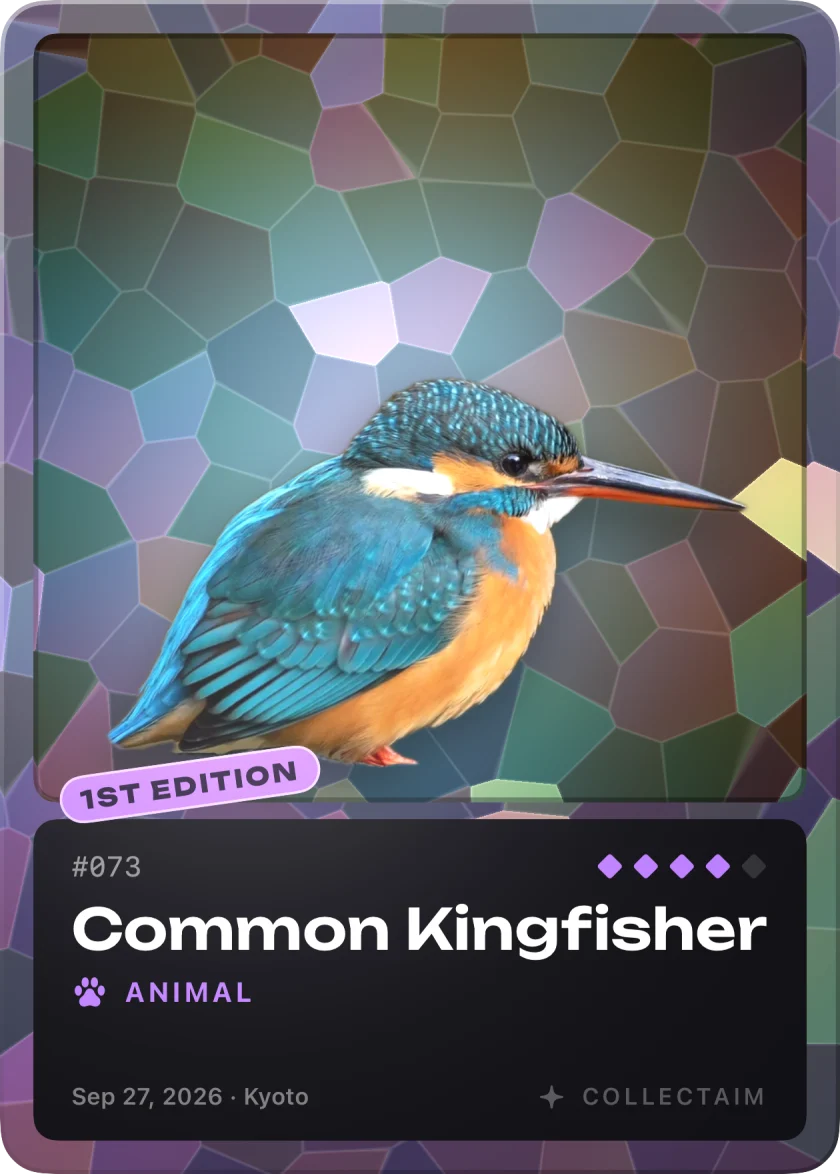
How to identify a bird from a photo
- Get the whole bird in frame. The head, the bill and the wing pattern carry most of the clues. A side view beats a bird seen from below.
- Zoom rather than crop. A sharp, small bird is easier than a big blurry one. If it flies off, you can bring in a photo you took with another camera later.
- Snap it in CollectAim. The bird lifts out of the background and the app names the species, with its scientific name.
- Check the look-alikes. Many birds have close cousins. If the name doesn't match what you saw, tap Not quite right? and pick the right one; the app checks it against your photo.
CollectAim works from photos, not sound. If you mostly hear birds rather than see them, a song identifier is the better tool; CollectAim is for the ones you manage to photograph and want to keep.
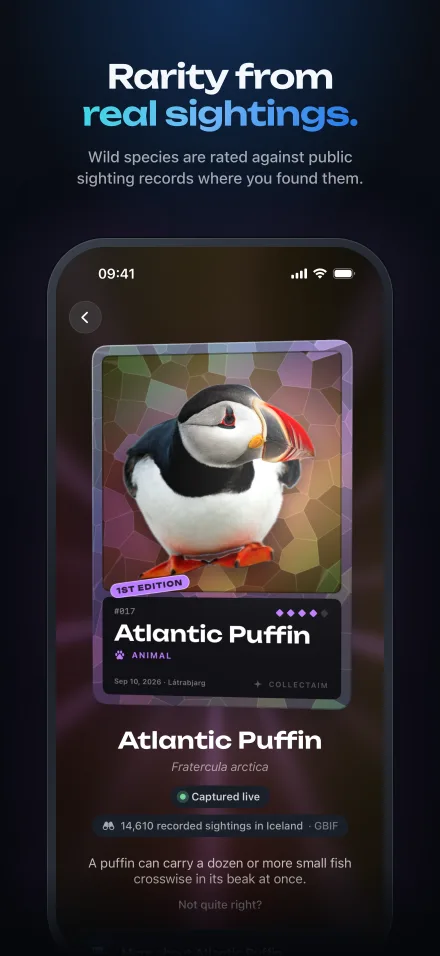
Rarity from real sightings
Most apps call every bird "rare". CollectAim counts. For wild birds, rarity comes from GBIF, the global open database of species records, using the sightings recorded in the country where you took the photo. A species is compared with the tenth most-recorded bird there: a feral pigeon is Common almost everywhere, a kingfisher is Epic in many countries and an owl you'll be lucky to see is often Legendary.
Because sightings measure where birdwatchers look as well as how many birds there are, the count can pull a species down freely but can lift it at most one tier above the AI's own judgement. Your card shows how many sightings were recorded in that country, so you can see the number behind the tier. How rarity works explains the whole method.
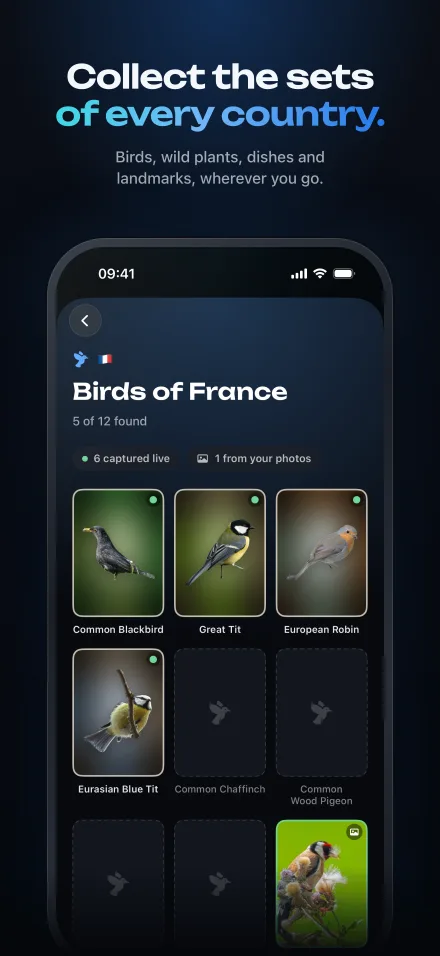
A checklist of birds for every country
Wherever you collect, CollectAim builds a birds set for that country: twelve species you can realistically find and photograph, chosen from the birds recorded most often there. A rare tier of ten more, harder finds comes with Pro. Travel to another country and a new set appears. Birds you photographed live show a green dot; birds added from your photo library get a photo badge, so you always know which ones you met yourself.
Weekly missions add something to look for, such as finding a few different animals or something uncommon or rarer, and every bird you find is filed in the Field Guide room of your 3D collection. Epic and Legendary birds also get a lit case in the Vault.
Good to know
- Garden visitors count. A robin on the fence is as collectable as a rare wader; it simply lands as Common.
- Pets and farm birds are different. Sightings databases record wild birds, so a parrot at home or a chicken keeps the AI's rarity instead of a count.
- Places stay approximate. On the discovery map, pins are rounded so a screenshot never reveals a nest site or your home. You can hide any card's location.